 (833) 659-2203

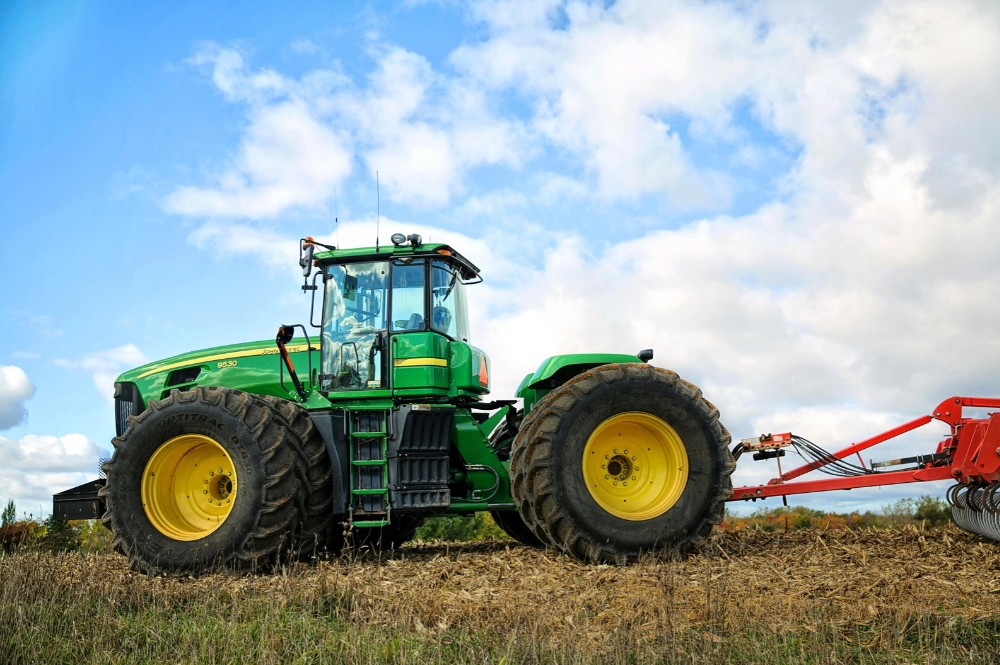
You found the right tractor, excavator, or semi truck. Now comes the financing decision. For established businesses, acquiring equipment usually comes down to equipment leasing vs financing, and the right answer depends on your business needs, how long you plan to keep the equipment, and how you manage cash flow.
Both paths let you put business equipment to work without a large cash outlay. Both can help you preserve working capital for payroll, fuel, materials, and the other operating expenses that keep a business running. The differences show up in ownership, monthly payments, end-of-term options, and the total cost over the life of the equipment.
Below, we break down how each option works, where each one makes sense, and what to look for in the fine print before you choose a loan or lease.
What Is Equipment Lease Financing?
Equipment lease financing lets your business use equipment for a fixed period in exchange for regular payments. Under a lease agreement, the leasing company holds ownership during the leasing period. When the lease expires, your options depend on the type of lease you chose.
Think of equipment leasing as paying for the use of a machine during its most productive years. Because you are not paying off the equipment's cost in full, monthly payments are often lower than a loan payment on the same machine.
Two types of leasing contracts come up most often for commercial equipment.
Fair Market Value (FMV) Leases
An FMV lease typically offers the lowest monthly payment. When the lease expires, you can return the equipment, renew, or use the purchase option to buy it at its fair market value at that time. Businesses that need frequent upgrades to new equipment often lease equipment this way.
TRAC Leases
A TRAC lease (Terminal Rental Adjustment Clause) is designed for commercial vehicles such as semi trucks, trailers, and work trucks. You and the lender agree on a residual value at the start. At the end of the term, you can purchase the vehicle for that amount, or it can be sold, with an adjustment based on whether the sale price lands above or below the residual. TRAC leases combine lower upfront costs and manageable payments with a clear path to ownership.
What Is Equipment Loan Financing?
Equipment loan financing is built around ownership. You borrow the funds to purchase equipment, repay that amount over a set repayment term, and own the equipment outright once the balance is paid. The equipment usually serves as collateral, which keeps business equipment loans simpler than many other types of business financing.
Some equipment loans require a down payment, while others can cover most or all of the purchase price. Interest rates typically depend on your credit history, time in business, the equipment type, and the age and condition of the equipment.
At Thirty3 Capital, our equipment financing and leasing programs include two common ownership structures.
Equipment Finance Agreements (EFAs)
An equipment finance agreement works much like a loan. Your business owns the equipment from day one and repays the financed amount over a fixed term. Because you own it, the equipment appears as an asset on your balance sheet. EFAs keep things straightforward, with predictable payments and no residual or buyout decision at the end.
Simple Interest Loans
With a simple interest loan, interest is calculated on the remaining principal balance. As you pay the balance down, the interest portion shrinks. For businesses that want to finance equipment with a clear, easy-to-follow repayment schedule, this structure keeps your financing cost transparent.
Equipment Leasing vs Financing: Key Differences
The biggest difference between equipment leasing vs financing is who owns the equipment during the term. Most of the other differences follow from that.
| Factor | Equipment Leasing | Equipment Financing |
|---|---|---|
| Ownership | Leasing company owns it during the leasing period | Your business owns it, outright once paid off |
| Monthly payments | Often lower | Often higher, since you pay off the full value |
| Upfront costs | Often lower upfront costs | May include a down payment, which can mean higher upfront costs |
| End of term | Return, renew, or buy (FMV), or buy at agreed residual (TRAC) | Equipment is yours, no buyout needed |
| Equity | Little or none until purchase | Builds with every payment |
| Balance sheet | Depends on lease structure and accounting rules | Recorded as an owned asset |
| Best fit | Equipment you upgrade often | Equipment you plan to run for its full useful life |
Neither column wins across the board. The right financing option depends on how the equipment earns money for your business and how long you expect it to stay in service.
Advantages of Leasing Equipment for Your Business
Leasing makes the most sense when flexibility matters more than long-term ownership. The main benefits of leasing equipment for your business include:
- Lower monthly payments. You pay for the portion of the equipment's value you use, which leaves more working capital for other parts of the operation.
- Easier upgrades. An FMV lease lets you return older machines when the lease expires and move into new equipment with current technology.
- Predictable budgeting. Fixed lease payments make it easier to plan costs across a season, a contract, or a full year.
- A path to ownership when you want it. TRAC leases and FMV purchase options give you a way to keep the equipment if it proves to be a long-term fit.
- Possible tax advantages. Depending on the structure, lease payments may be treated as operating expenses. Tax implications vary by lease and by business, so review them with a qualified tax professional.
Leasing may be a strong fit for technology-heavy equipment, vehicles on a set replacement cycle, or machines tied to a specific project, and you can use our monthly payment calculator to get a sense of how different structures affect your cash flow.
Benefits of Equipment Financing
If you plan to run a machine for its full useful life, equipment financing usually delivers more value over time. Ownership turns each payment into equity in an asset your business controls, which supports long-term business growth.
Key benefits of equipment financing include:
- Full ownership. Once the balance is paid, the equipment belongs to you with no buyout or return conditions.
- Equity and resale value. Durable equipment like tractors, dozers, and trucks often holds value, which you can recover through resale or trade-in later.
- No usage restrictions. Owned equipment is not subject to the hour or mileage limits that can come with some leases.
- Predictable repayment. Fixed terms and simple interest structures make it easy to see exactly what you owe and when.
- Possible tax benefits. Financed equipment may qualify for depreciation deductions such as Section 179. A qualified tax professional can tell you how these rules apply to your purchase.
Financing also works well for new or used equipment. Buying used or refurbished equipment and financing it can lower your total acquisition cost while still giving you full ownership. For many buyers, well-maintained used equipment or refurbished equipment offers years of reliable service at a lower price than new.
Is It Better to Lease or Buy Equipment for Business?
There is no single right answer, but a few practical questions usually point to the right solution.
How long will you use it? If the equipment will stay in service for most of its useful life, financing to own tends to cost less overall. If you expect to replace it in three to five years, a lease may be the better fit.
How fast does it lose value or become outdated? Equipment with rapidly changing technology often makes more sense to lease. Heavy iron that holds value for years is usually a good candidate for ownership.
What does your cash flow look like? Lower lease payments can ease pressure on monthly budgets. If your monthly revenue comfortably supports a higher payment, building equity through a loan or EFA may pay off later.
Do you want to keep it at the end? If the answer is yes, financing or a TRAC lease gives you a direct route to ownership. If you are unsure, an FMV lease keeps your options open.
Many businesses use both. A contractor might own the core fleet of excavators and loaders while leasing specialty equipment for a specific job. That kind of long term planning works best when you compare your actual numbers with a dedicated finance specialist.
What to Check in the Fine Print
Before signing any loan or lease, review these details so you understand the total cost:
- Rate type. Ask whether you are getting a fixed rate or a rate that can change.
- Repayment term and payment schedule. Confirm the length of the term and whether seasonal payments are available.
- Down payment and fees. Know what is due at signing and whether any fees are added to the financing cost.
- Soft costs. Ask whether delivery, installation, or setup can be included in the financing.
- End-of-term options. For leasing terms, confirm the purchase option, residual value, and return conditions.
- Eligibility requirements. Understand what credit, time in business, and documentation the financing provider requires.
How the Decision Plays Out by Industry
Your equipment needs and income patterns shape which structure works best. Here is how established businesses in our core industries tend to approach it.
Agriculture
Farm income rarely arrives as steady monthly revenue. Many farmers and ranchers finance tractors, combines, and implements they plan to run for decades, then pair that ownership with seasonal or annual payment schedules that line up with harvest. Thirty3 Capital’s agriculture equipment financing programs are built around those seasonal cash flow patterns.
Construction
Contractors often need to purchase equipment on short notice to start a job or keep a project moving. Owning core machines builds long-term value, while leasing can cover equipment needed for a single contract or a busy season, and our construction equipment financing options are structured with that flexibility in mind.
Transportation
Fleet operators and owner-operators frequently choose TRAC leases for semi trucks, trailers, and other commercial vehicles. The structure keeps payments manageable and supports a regular replacement cycle, with the option to purchase at the agreed residual. Others prefer equipment loans to own a well-maintained used truck outright, and our transportation equipment financing programs support both approaches.
In each of these industries, the most useful lenders are the ones willing to structure solutions around how your business actually earns money. Seasonal payment schedules and other creative solutions can make a meaningful difference in cash flow.
How Thirty3 Capital Helps You Choose
Not all equipment financing companies offer both leasing and lending. Thirty3 Capital provides business equipment financing for established businesses across the United States, with programs that include equipment loans, EFAs, TRAC leases, FMV leases, and simple interest loans. As both a direct and indirect lender, we can match your equipment purchases to the structure that fits your operation.
What working with us as your financing provider looks like:
- Same-day to 24-hour credit approval decisions*
- A one-page application for financing up to $600,000
- Financing for new or used equipment, including private sales
- Seasonal and customized payment options when they fit your cash flow
- Transparent pricing and plain-English terms
- A dedicated finance specialist, with support in English and Spanish
Our team works with agriculture, construction, and transportation businesses every day. We know what this equipment is worth and how it earns money, and we focus on building long-term relationships with the businesses we provide financing for.
*All financing subject to approved credit (OAC).